Industry News
Industry News
Home > About > News > Industry News > A Comprehensive Guide to Operating and Maintaining a Cantilever Stacker

A Comprehensive Guide to Operating and Maintaining a Cantilever Stacker

20 Jun.2024

A cantilever stacker is a versatile and efficient piece of equipment used in various industries for lifting and stacking heavy loads. It is designed to provide stability and ease of operation while ensuring the safety of both the operator and the surrounding environment. In this comprehensive guide, we will explore the different types of cantilever stackers, their components, safety features, pre-operational procedures, operating guidelines, and maintenance and inspection practices.

What is a Cantilever Stacker?

A cantilever stacker is a material handling equipment that is used to lift, transport, and stack heavy loads. It consists of a mast, forks, and a counterweight system. The mast provides vertical movement, while the forks are used to lift and carry the loads. The counterweight system ensures stability during operation.

Types of Cantilever Stackers

There are several types of cantilever stackers available, each designed for specific applications. These include manual stackers, electric stackers, and semi-electric stackers. Manual stackers are operated manually, while electric stackers are powered by electricity. Semi-electric stackers combine manual and electric operation.

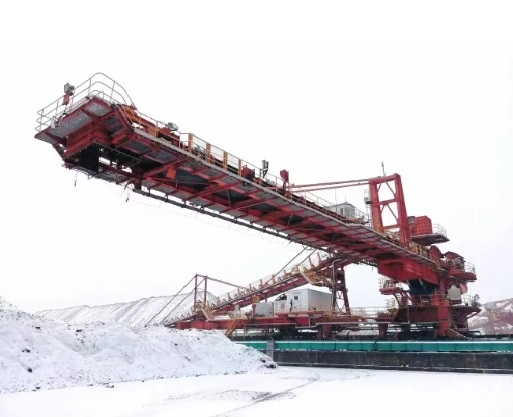
Cantilever Stacker

Components of a Cantilever Stacker

A cantilever stacker consists of various components that work together to ensure smooth and efficient operation. These include the mast, forks, hydraulic system, control panel, battery (in electric stackers), wheels, and safety features such as emergency stop buttons and safety sensors.

Safety Features of a Cantilever Stacker

Safety is of utmost importance when operating a cantilever stacker. These machines are equipped with several safety features to protect the operator and prevent accidents. Some common safety features include emergency stop buttons, safety sensors, overload protection, and stability mechanisms.

Cantilever Stacker

Pre-Operational Procedures

Before operating a cantilever stacker, it is essential to perform pre-operational procedures to ensure the machine is in proper working condition. These procedures include checking the battery (in electric stackers), inspecting the forks and mast, testing the controls, and ensuring the safety features are functional.

Operating the Cantilever Stacker

Operating a cantilever stacker requires proper training and adherence to safety guidelines. The operator should be familiar with the controls, understand the load capacity, and know how to maneuver the machine safely. It is crucial to maintain clear visibility, avoid overloading, and operate the stacker smoothly to prevent accidents.

Cantilever Stacker

Safety Guidelines

To ensure the safety of the operator and those in the surrounding area, it is essential to follow specific safety guidelines when operating a cantilever stacker. These guidelines include wearing appropriate personal protective equipment, maintaining clear visibility, keeping a safe distance from other objects or individuals, and using the safety features provided.

Maintenance and Inspections

Regular maintenance and inspections are crucial for the safe and efficient operation of a cantilever stacker. This includes checking the hydraulic system, inspecting the forks and mast for any damage, lubricating moving parts, and testing the safety features. It is important to follow the manufacturer's guidelines for maintenance and schedule regular inspections by qualified technicians.

Cantilever Stacker

Conclusion

Operating and maintaining a cantilever stacker requires knowledge, training, and adherence to safety guidelines. By understanding the different types of stackers, their components, safety features, and following proper procedures, operators can ensure the safe and efficient operation of these machines. Regular maintenance and inspections are essential to prolong the lifespan of the stacker and prevent accidents. By following this comprehensive guide, operators can confidently operate and maintain a cantilever stacker while prioritizing safety.

The Advantages of Using a Cantilever Stacker in Bulk Material Handling


Privacy Policy

Privacy Policy

· Privacy Policy

There is currently no content available


Email:ddmcxd@126.com

Address:No. 290, Innovation Avenue, National High-tech Industrial Development Zone, Jiangyin City,Jiangsu Province

Product Performance Partner
LEARN MORE →
Performance
  • Contact
  • Industry News
    Industry News
    Home > About > News > Industry News > Bridge-Type Scraper Reclaimer Design and Working Principles Explained

    Bridge-Type Scraper Reclaimer Design and Working Principles Explained

    06 Jan.2026

    In bulk material handling industries such as cement, power generation, mining, metallurgy, and ports, efficient stockpile management is essential for maintaining continuous production and reducing operational costs. One of the most widely used solutions for circular or longitudinal storage yards is the bridge-type scraper reclaimer. Known for its stability, high reclaiming efficiency, and automation capability, this equipment plays a critical role in modern material handling systems.

    This article explains the design structure, working principles, advantages, and typical applications of bridge-type scraper reclaimers, while also introducing how Dadi leverages engineering experience and manufacturing strength to deliver reliable reclaimer solutions.

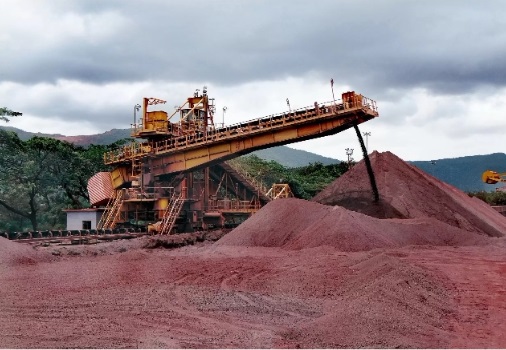
    Bridge-type Scraper Reclaimer

    What Is a Bridge-Type Scraper Reclaimer?

    A bridge-type scraper reclaimer is a bulk material reclaiming machine installed over a stockpile, typically in a circular or longitudinal storage yard. It consists of a bridge structure spanning the pile, along which a scraper system moves to collect material and discharge it onto a conveyor belt for downstream processing.

    This type of reclaimer is especially suitable for handling materials such as limestone, coal, iron ore, bauxite, clinker, and other granular or powdery bulk materials.

    Main Structural Components

    A bridge-type scraper reclaimer is composed of several key systems working together:

    1. Bridge Structure

    The bridge is the main load-bearing framework, usually made of high-strength steel. It spans across the stockpile and supports the scraper mechanism, walking system, and auxiliary equipment. Its rigid design ensures stability during continuous operation.

    2. Scraper System

    The scraper system includes scraper chains, scraper blades, and drive units. As the scraper moves along the bridge, it cuts into the material pile and drags material toward the discharge point.

    3. Traveling and Walking Mechanism

    Depending on the yard layout, the reclaimer may be equipped with rail-mounted traveling wheels or walking mechanisms that allow the bridge to move longitudinally or rotationally. This ensures full coverage of the stockpile area.

    4. Discharge Conveyor

    Collected material is transferred from the scraper to a discharge conveyor, which feeds downstream belt conveyors or processing equipment.

    5. Electrical and Control System

    Modern bridge-type scraper reclaimers are equipped with PLC-based control systems, sensors, and variable frequency drives (VFDs) to enable automated, safe, and efficient operation.

    Working Principle of a Bridge-Type Scraper Reclaimer

    The working process of a bridge-type scraper reclaimer can be summarized in the following steps:

    1. Positioning: The bridge moves to the designated reclaiming area along rails or a circular track.

    2. Scraping: The scraper chain is activated, and scraper blades penetrate the material pile under gravity and mechanical force.

    3. Material Collection: Bulk material is dragged toward the center or discharge end of the bridge.

    4. Discharge: Material falls onto the discharge conveyor and is transported out of the storage yard.

    5. Continuous Operation: The bridge advances gradually, ensuring uniform reclaiming and minimizing material segregation.

    This continuous reclaiming process provides a steady and controlled material flow, which is essential for stable downstream production.

    Key Advantages of Bridge-Type Scraper Reclaimers

    Bridge-type scraper reclaimers offer several technical and operational benefits:

    • High Reclaiming Efficiency: Capable of continuous operation with stable output capacity.

    • Uniform Material Flow: Reduces material segregation and improves product quality.

    • Strong Adaptability: Suitable for various bulk materials and storage yard layouts.

    • High Automation Level: Supports remote control, automatic sequencing, and integration with plant DCS systems.

    • Low Operating Cost: Simple mechanical structure leads to reduced maintenance requirements and long service life.

    Typical Applications

    Bridge-type scraper reclaimers are widely used in:

    • Cement plants (limestone and clinker storage yards)

    • Thermal power plants (coal yards)

    • Steel plants (ore and flux storage)

    • Ports and terminals (bulk cargo handling)

    • Mining and mineral processing facilities

    Dadi’s Expertise in Bridge-Type Scraper Reclaimer Solutions

    With decades of experience in bulk material handling equipment, Dadi provides customized bridge-type scraper reclaimer solutions tailored to different industries and project requirements. By combining advanced engineering design, strict quality control, and modern manufacturing processes, Dadi delivers equipment that emphasizes durability, efficiency, and operational safety.

    Backed by a strong technical team and a complete service system, Dadi supports customers throughout the entire project lifecycle—from design and manufacturing to installation guidance and after-sales support. Learn more about Dadi’s company background and capabilities at:

    https://en.cndadiem.com/about.html

    Frequently Asked Questions (FAQ)

    1. What materials can a bridge-type scraper reclaimer handle?

    Bridge-type scraper reclaimers are suitable for coal, limestone, iron ore, clinker, bauxite, gypsum, and other bulk materials with good flow characteristics.

    2. How does a bridge-type scraper reclaimer differ from a bucket wheel reclaimer?

    A scraper reclaimer provides more uniform reclaiming and lower dust generation, while a bucket wheel reclaimer typically offers higher instantaneous capacity but with more complex mechanical structures.

    3. Is automation possible for bridge-type scraper reclaimers?

    Yes. Modern systems support PLC control, remote operation, automatic reclaiming programs, and integration with plant-wide control systems.

    4. What factors affect reclaiming capacity?

    Key factors include material properties, scraper speed, pile geometry, bridge travel speed, and conveyor capacity.

    5. How long is the service life of a bridge-type scraper reclaimer?

    With proper design, operation, and maintenance, the service life can exceed 20 years.

    Conclusion

    Bridge-type scraper reclaimers are an indispensable solution for efficient and reliable bulk material reclaiming. Their robust design, continuous working principle, and high automation potential make them ideal for modern industrial storage yards. By partnering with experienced manufacturers like Dadi, operators can achieve optimized material handling performance, reduced downtime, and long-term operational value.

    How Bridge‑Type Scraper Reclaimers Improve Material Homogenization in Bulk Storage Yards

    Privacy Policy

    Privacy Policy

    · Privacy Policy

    There is currently no content available


    Email:ddmcxd@126.com

    Address:No. 290, Innovation Avenue, National High-tech Industrial Development Zone, Jiangyin City,Jiangsu Province