Material yards play an important role in industries that handle large quantities of bulk materials. Whether the material is coal, iron ore, limestone, clinker, fertilizer, grain, or other bulk solids, efficient storage and reclaiming are essential for maintaining a stable production process.
Material yard reclaimer equipment is designed to recover stored bulk materials from stockpiles and transfer them to downstream conveying or processing systems. Choosing the right reclaimer requires careful consideration of material properties, storage layout, required capacity, reclaiming method, and overall plant configuration.
Dadi is a private enterprise specializing in bulk material conveying equipment and high-end metallurgical equipment. With a focus on industrial material handling and equipment solutions, Dadi provides equipment and system solutions for applications where reliable bulk material storage, reclaiming, conveying, and processing are required.
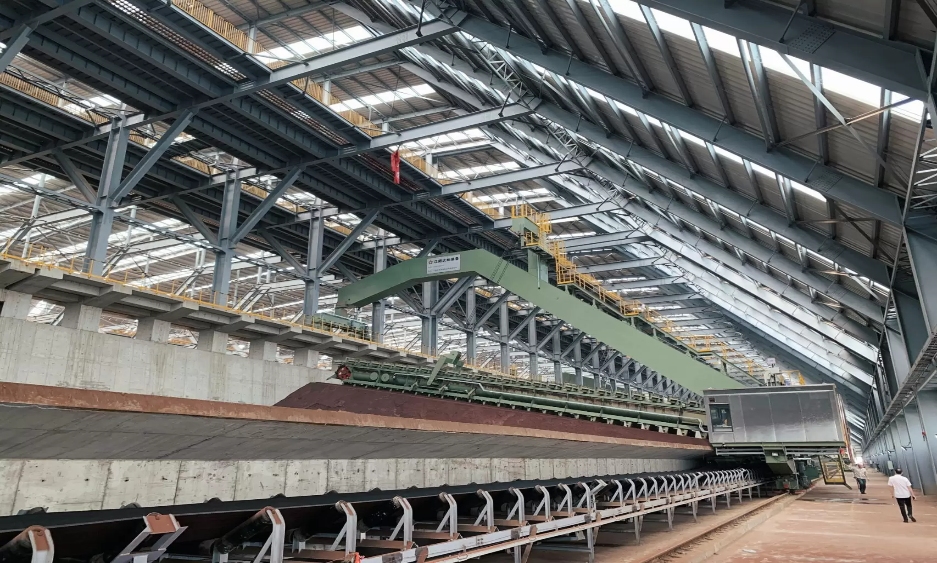
What Is Material Yard Reclaimer Equipment?
A material yard reclaimer is industrial equipment used to continuously or intermittently reclaim bulk materials from storage piles. After raw materials are delivered to a stockyard by conveyors, stackers, trucks, rail systems, or other transportation equipment, the materials can remain in storage until they are needed by the production line.
The reclaimer removes material from the stockpile in a controlled manner and transfers it to a conveyor or other downstream transportation system. This allows the stored material to be fed into processes such as crushing, screening, blending, sintering, pelletizing, grinding, smelting, or other production operations.
A complete material yard reclaiming system usually consists of the reclaimer itself, stockyard infrastructure, material conveying equipment, transfer points, electrical systems, control systems, and dust management equipment.
The reclaimer is therefore not an isolated machine. It is an important part of the complete bulk material handling system.
Why Material Yard Reclaimers Are Important
Large industrial plants often need to store significant quantities of raw materials to maintain continuous production. Directly feeding materials from incoming transportation systems to production equipment is not always practical because material supply and production demand may vary.
A stockyard provides a buffer between material receiving and production. However, storing material is only useful when it can be recovered efficiently and consistently.
Material yard reclaimer equipment provides controlled material recovery from stockpiles while reducing the need for manual material handling. It can also help maintain a stable feed rate for downstream equipment.
In large-scale operations, an appropriately designed reclaimer can improve material handling efficiency, reduce unnecessary equipment movement, and support continuous production.
Main Types of Material Yard Reclaimer Equipment
Different reclaimer designs are available for different stockyard layouts, material characteristics, and capacity requirements. The most common types include bucket-wheel reclaimers, scraper reclaimers, bridge reclaimers, portal reclaimers, and specialized reclaiming systems.
The appropriate equipment depends on factors such as stockpile shape, reclaiming capacity, material density, particle size, moisture content, required blending performance, available space, and plant configuration.
Bucket-Wheel Reclaimer
A bucket-wheel reclaimer uses a rotating bucket wheel to continuously cut material from the face of a stockpile. The material collected by the buckets is transferred through an internal conveying system and discharged onto a downstream conveyor.
Bucket-wheel reclaimers are widely used in large stockyards because they can provide high reclaiming capacity and continuous operation.
They are commonly used for coal, iron ore, limestone, and other bulk materials in steel plants, power plants, cement plants, ports, and large industrial material storage facilities.
The design can be adapted according to stockpile dimensions and required reclaiming capacity. Bucket-wheel diameter, bucket volume, boom length, machine travel speed, and conveyor capacity all influence the overall performance of the equipment.
Scraper Reclaimer
A scraper reclaimer uses scraper blades or chains to recover material from the stockpile. The scraper mechanism moves through the material and transfers it toward a discharge conveyor or reclaiming system.
Scraper reclaimers are suitable for applications where a relatively compact stockyard arrangement is required. They can also provide controlled and continuous material recovery.
The scraper system is particularly useful for materials that can be effectively moved by mechanical scraping rather than bucket excavation.
Bridge Reclaimer
A bridge reclaimer is installed across a stockpile and uses a reclaiming mechanism mounted on a bridge structure.
The machine can travel along rails while the reclaiming system removes material from the stockpile. Bridge reclaimers are often used in longitudinal stockyards where stable and organized material storage is required.
Their structure allows the reclaiming mechanism to cover a broad stockpile area while maintaining a relatively organized stockyard layout.
Portal Reclaimer
A portal reclaimer consists of a portal-type supporting structure spanning the stockpile, with a reclaiming mechanism mounted on the structure.
This design can be suitable for long stockpiles and applications requiring continuous reclaiming along a defined material storage area.
Portal reclaimers are commonly considered when stockyard geometry and plant layout require a large working span combined with controlled material recovery.
How a Material Yard Reclaimer Works
The operating principle of a material yard reclaimer depends on its mechanical design, but the basic process is similar.
Bulk material is first stored in a stockpile using a stacking system or other material receiving equipment. When material is required by the production line, the reclaimer moves into the designated reclaiming area.
The reclaiming mechanism then cuts, scrapes, or excavates material from the stockpile. The recovered material is collected and transferred to the machine's discharge conveyor or another conveying mechanism.
The material is then delivered to the main yard conveyor and transported toward the processing plant.
Modern reclaimers can operate with automated travel, positioning, speed adjustment, and material flow control. Sensors and control systems can be integrated to improve operational accuracy and coordinate the reclaimer with upstream and downstream equipment.
Key Components of Material Yard Reclaimer Equipment
A material yard reclaimer is a complex mechanical system consisting of several major components. Each component must be properly selected and integrated to ensure reliable operation.
Reclaiming Mechanism
The reclaiming mechanism is the core working component of the equipment. Depending on the reclaimer type, it may consist of buckets, scraper chains, blades, or other material recovery devices.
Its design must correspond to the physical characteristics of the bulk material. Abrasive materials such as iron ore may require wear-resistant components and robust structural design.
Conveyor System
After the material is reclaimed, it must be transported away from the machine.
The reclaimer's conveyor system must provide sufficient capacity and stable material transfer. Conveyor width, belt speed, drive power, transfer arrangement, and loading conditions should be considered during system design.
The discharge point must also be properly aligned with the yard conveyor to minimize material spillage and uncontrolled material flow.
Travel Mechanism
Many large reclaimers move along rails installed beside or beneath the stockpile.
The travel system normally includes drive units, wheels, gearboxes, motors, brakes, and rail-related components.
Travel speed and positioning accuracy are important because the machine needs to move along the stockpile while maintaining stable reclaiming performance.
Supporting Structure
The structural frame carries the reclaiming mechanism, conveyors, drive systems, electrical equipment, and other components.
Because material yard reclaimers can be large machines, structural design must account for dead weight, material loads, dynamic loads, wind loads, and operating forces.
Proper structural design helps maintain machine stability and dimensional accuracy throughout operation.
Electrical and Control System
The electrical system provides power to motors, drives, sensors, actuators, and auxiliary equipment.
The control system coordinates reclaiming speed, machine travel, conveyor operation, safety interlocks, and communication with other material handling equipment.
Automated control can also allow the reclaimer to operate according to predefined stockpile positions and production requirements.
Important Material Properties for Reclaimer Selection
Selecting material yard reclaimer equipment requires a clear understanding of the material being handled.
Bulk density affects the required structural strength and conveying capacity. Higher-density materials generally result in greater loads on the reclaiming mechanism and conveyor system.
Particle size is also important. Large lumps can increase mechanical impact and may require reinforced reclaiming components.
Moisture content affects material flowability. Wet or sticky materials may adhere to equipment surfaces or affect discharge behavior.
Abrasiveness is another important factor. Iron ore, limestone, clinker, and other mineral materials can cause significant wear to buckets, scraper blades, chutes, liners, and conveyor components.
Material angle of repose also influences stockpile geometry and reclaiming performance. The stockpile design should be compatible with the working range of the selected reclaimer.
Reclaimer Capacity and Throughput
Reclaiming capacity is one of the most important specifications when selecting material yard reclaimer equipment.
Capacity is generally expressed in tonnes per hour and should be determined according to the requirements of the downstream production system.
The required capacity should not be based only on average material consumption. Peak production rates, material characteristics, stockyard operating patterns, and downstream conveyor capacity should also be considered.
For example, a steel plant may require a large reclaiming capacity for iron ore, limestone, or other raw materials. A cement plant may require continuous reclaiming of limestone or clinker at a rate synchronized with the production process.
The reclaimer, conveyor system, transfer points, and downstream equipment should be designed as a coordinated system so that one component does not unnecessarily restrict the overall material flow.
Stockyard Layout and Reclaimer Design
Stockyard geometry has a direct influence on reclaimer selection.
Important parameters include stockpile length, width, height, storage capacity, aisle arrangement, rail spacing, material flow direction, and the position of incoming and outgoing conveyors.
Longitudinal stockyards are commonly designed with stacking and reclaiming equipment operating along the length of the stockpile.
Circular stockyards may use specialized stacking and reclaiming arrangements that allow material to be stored and recovered within a circular area.
The reclaimer should be selected after considering the complete stockyard arrangement rather than treating the equipment as a standalone machine.
Reclaiming and Blending Functions
In many industrial applications, material yard reclaimers do more than simply recover stored material. They can also support material blending and homogenization.
When materials from different layers of a stockpile are reclaimed in a controlled sequence, the resulting material flow can have a more consistent composition.
This is particularly important in industries such as steel, cement, mining, and mineral processing where variations in raw material composition can affect downstream production.
Reclaiming strategy, stockpile formation method, machine movement, and reclaiming depth can all influence blending performance.
For this reason, stacking and reclaiming systems should be designed together when material homogenization is an important production requirement.
Material Yard Reclaimer Applications in Steel Plants
Steel plants handle large volumes of iron ore, limestone, coal, coke, and other raw materials.
Material yard reclaimers are commonly used to recover these materials from stockpiles and feed them into crushing, screening, sintering, pelletizing, or other processing systems.
For iron ore and limestone applications, wear resistance and structural strength are particularly important because these materials can generate substantial mechanical loads and abrasive wear.
In integrated steel plants, reclaiming equipment can be connected with long-distance belt conveyors and other bulk material handling systems to provide continuous raw material transportation.
Dadi's experience in bulk material conveying equipment and high-end metallurgical equipment is particularly relevant to applications where stockyard reclaiming needs to be integrated with broader metallurgical material handling systems.
Material Yard Reclaimer Applications in Cement Plants
Cement production requires large quantities of limestone, clay, gypsum, coal, and other raw materials.
Limestone is often stored in large stockpiles before being reclaimed and delivered to crushing, grinding, and proportioning systems.
A suitable reclaimer can provide stable material recovery and help maintain consistent feed conditions for downstream processing equipment.
When a blending function is required, the reclaiming system can also be designed to recover material from different layers of the stockpile to improve material consistency.
Material Yard Reclaimers for Mining Operations
Mining operations often require large-scale storage and handling of ore and bulk minerals.
Reclaimers can recover ore from stockpiles and transfer it to crushing plants, beneficiation systems, screening equipment, or transportation systems.
Because mined materials can vary significantly in particle size, density, moisture, and abrasiveness, reclaimer selection should be based on detailed material analysis.
Heavy-duty components, wear-resistant liners, appropriate drive systems, and suitable conveying capacity are important considerations for mining applications.
Material Yard Reclaimers in Power Plants
Power plants that use coal as fuel require reliable systems for coal receiving, stacking, storage, reclaiming, and conveying.
A material yard reclaimer can recover coal from storage piles and feed it into the plant's coal handling system.
Stable reclaiming is important because the boiler fuel supply needs to remain consistent during normal plant operation.
The reclaimer should therefore be integrated with belt conveyors, transfer towers, crushers, screening equipment, and the plant's central control system.
Material Yard Reclaimers for Ports and Terminals
Ports and bulk material terminals handle large volumes of materials that must be transferred between ships, storage yards, rail systems, trucks, and inland transportation networks.
Material yard reclaimers can be used to recover stored bulk materials and transfer them to ship loaders, belt conveyors, rail loading systems, or other transportation equipment.
High reclaiming capacity is often important in terminal applications because the material handling system must support efficient cargo movement.
The equipment must also be designed according to the available stockyard space, material type, operating schedule, and connection with other terminal equipment.
Automation and Control of Material Yard Reclaimers
Modern material yard reclaimers can incorporate automated control systems to improve operational efficiency and positioning accuracy.
Sensors can monitor machine location, conveyor speed, motor status, material flow, and other operating parameters.
PLC-based control systems can coordinate the reclaimer with stackers, belt conveyors, transfer stations, crushers, and downstream production equipment.
Remote monitoring can provide operators with information about machine status and operating conditions.
Automatic positioning systems can also help the reclaimer move accurately along predefined stockpile areas.
The degree of automation should be selected according to the plant's operational requirements, investment plan, production capacity, and maintenance capabilities.
Wear Protection for Reclaimer Equipment
Wear protection is an important consideration when reclaiming abrasive bulk materials.
Components such as buckets, scraper blades, chutes, liners, conveyor loading areas, and material contact surfaces can experience continuous abrasion.
Wear-resistant steel, hardened components, replaceable liners, and appropriate material handling geometry can be used to extend component service life.
The design should also make maintenance and replacement practical. Wear parts that can be quickly inspected and replaced can help reduce equipment downtime during scheduled maintenance.
Maintenance of Material Yard Reclaimer Equipment
Regular maintenance is essential for maintaining reliable reclaimer operation.
Mechanical inspections should cover drive units, gearboxes, bearings, wheels, rails, chains, buckets, scraper components, conveyor systems, and structural connections.
Lubrication systems should be checked according to the manufacturer's maintenance schedule.
Electrical inspections should include motors, cables, control cabinets, sensors, limit switches, safety devices, and communication systems.
Wear components should be inspected regularly, particularly when handling highly abrasive materials.
Preventive maintenance based on operating hours and equipment condition can help identify component deterioration before it affects production.
Safety Considerations for Material Yard Reclaimers
Material yard reclaimers are large industrial machines operating around heavy bulk materials and moving mechanical components. Safety should therefore be incorporated into equipment design, installation, operation, and maintenance.
Emergency stop systems, travel limit switches, overload protection, braking systems, access controls, warning devices, and safety interlocks are important parts of a properly designed reclaimer.
Maintenance personnel should have safe access to inspection and service areas.
The stockyard should also have clearly defined operating zones and appropriate procedures for coordinating personnel, mobile equipment, conveyors, stackers, and reclaimers.
How to Select the Right Material Yard Reclaimer
Selecting the appropriate reclaimer starts with defining the material handling requirements.
The first consideration is the material itself, including bulk density, particle size, moisture, abrasiveness, temperature, and flowability.
The next step is determining the required reclaiming capacity and operating pattern. Continuous, intermittent, high-capacity, and blending-oriented applications may require different machine configurations.
Stockyard dimensions must also be evaluated. Stockpile length, width, height, storage capacity, and conveyor arrangement all affect equipment selection.
The required level of automation should then be established based on plant operation and control architecture.
Finally, the manufacturer should be evaluated based on engineering capability, equipment manufacturing experience, quality control, project integration, installation support, and after-sales service.
Why Work With an Experienced Reclaimer Equipment Manufacturer?
Material yard reclaimers are highly integrated machines. Their performance depends on the coordination of mechanical design, structural engineering, conveying technology, electrical systems, control systems, and stockyard layout.
An experienced manufacturer can evaluate these factors together rather than focusing only on the reclaimer's basic mechanical specifications.
This is particularly important for customized industrial projects where the equipment must fit an existing plant layout or connect with an established conveying system.
A qualified manufacturer can also assist with capacity calculations, equipment configuration, technical specifications, installation requirements, and integration with upstream and downstream systems.
Dadi Bulk Material Handling and Metallurgical Equipment
Dadi is a private enterprise primarily engaged in bulk material conveying equipment and high-end metallurgical equipment.
Its business focus covers industrial equipment solutions for bulk material handling and metallurgical production, where reliable transportation, storage, reclaiming, and process integration are essential.
For material yard applications, reclaimer equipment needs to work together with stacking systems, belt conveyors, transfer stations, crushing and screening equipment, and other material handling machinery. Dadi's expertise in bulk material conveying equipment provides a strong foundation for developing integrated material handling solutions.
In metallurgical applications, equipment selection must also consider production capacity, raw material characteristics, process requirements, equipment reliability, and plant layout. Dadi's focus on high-end metallurgical equipment allows material handling requirements to be considered within the broader production system.
For customers requiring customized equipment, technical specifications can be developed according to material properties, stockyard dimensions, throughput requirements, operating conditions, and downstream process requirements.
Integrated Material Yard Reclaiming Systems
A material yard reclaimer delivers the best results when it is designed as part of an integrated bulk material handling system.
The complete system may include receiving equipment, stackers, stockpiles, reclaimers, belt conveyors, transfer towers, crushers, screens, feeders, dust control equipment, electrical systems, and automated control systems.
Each part of the system should be matched according to capacity and operating requirements.
For example, the reclaimer capacity should be compatible with the receiving capacity of the downstream conveyor. Transfer chutes should provide stable material flow without excessive blockage or spillage. Control systems should coordinate equipment startup and shutdown sequences.
Integrated engineering can help improve material flow and reduce unnecessary equipment conflicts within the stockyard.
Cost Factors of Material Yard Reclaimer Equipment
The cost of a material yard reclaimer depends on many technical factors rather than equipment size alone.
Important factors include reclaiming capacity, machine dimensions, stockpile configuration, material density, material abrasiveness, reclaiming mechanism, conveyor capacity, automation level, structural requirements, electrical equipment, and customization.
Installation conditions can also influence the overall project cost. Rail systems, foundations, power supply, control infrastructure, and material transfer arrangements may need to be included in the project design.
A suitable equipment solution should therefore be evaluated based on total system requirements rather than comparing the initial equipment price alone.
Common Questions About Material Yard Reclaimer Equipment
What is a material yard reclaimer used for?
A material yard reclaimer is used to recover bulk materials from stockpiles and transfer them to downstream conveyors or processing systems. It is widely used for coal, iron ore, limestone, clinker, minerals, and other bulk materials.
What is the difference between a stacker and a reclaimer?
A stacker is mainly used to place bulk material into a stockpile, while a reclaimer is used to remove material from the stockpile. Many large stockyards use stackers and reclaimers together as part of a complete material handling system.
What types of material yard reclaimers are available?
Common types include bucket-wheel reclaimers, scraper reclaimers, bridge reclaimers, and portal reclaimers. The appropriate type depends on stockyard layout, material characteristics, capacity, and operating requirements.
How do I select the right reclaimer capacity?
Reclaimer capacity should be determined according to downstream production requirements, material consumption, peak operating rates, conveyor capacity, and stockyard operating conditions. The entire conveying system should be considered during capacity selection.
Can a reclaimer handle abrasive materials?
Yes. Reclaimers can be designed for abrasive materials such as iron ore, limestone, clinker, and minerals. Wear-resistant components and suitable structural and mechanical designs are important for these applications.
Can material yard reclaimers support material blending?
Yes. Certain reclaiming systems can recover material from different layers of a stockpile in a controlled manner, helping improve material consistency. The stacking method and reclaiming method should be designed together when blending is required.
Can material yard reclaimers be automated?
Yes. Modern reclaimers can integrate PLC control, sensors, positioning systems, conveyor interlocks, remote monitoring, and other automation functions. The automation configuration can be selected according to the plant's operating requirements.
What industries use material yard reclaimer equipment?
Material yard reclaimers are widely used in steel plants, cement plants, mining operations, power plants, ports, bulk material terminals, mineral processing facilities, and other industries that store and process large quantities of bulk materials.
Can Dadi provide customized material yard reclaimer equipment?
Dadi focuses on bulk material conveying equipment and high-end metallurgical equipment and can develop industrial equipment solutions according to project requirements. Reclaimer configuration can be considered based on material properties, stockyard dimensions, reclaiming capacity, conveying arrangements, and downstream production requirements.
Conclusion
Material yard reclaimer equipment is an important part of modern bulk material handling systems. By recovering stored materials at a controlled rate and transferring them to downstream processes, reclaimers help connect stockyard storage with continuous industrial production.
The right equipment selection requires careful consideration of material characteristics, stockpile dimensions, reclaiming capacity, machine type, conveying system, automation requirements, wear protection, maintenance, and overall plant integration.
Bucket-wheel reclaimers, scraper reclaimers, bridge reclaimers, and portal reclaimers each have different structural and operating characteristics. Selecting the appropriate design should be based on actual project requirements rather than relying on a standard configuration.
As a private enterprise specializing in bulk material conveying equipment and high-end metallurgical equipment, Dadi focuses on providing industrial equipment solutions that integrate material handling requirements with production processes. For material yard projects, this system-oriented approach can help ensure that reclaimers, conveyors, stockyard equipment, and downstream processing systems work together efficiently.
A well-designed material yard reclaiming system can provide stable material recovery, reliable conveying performance, improved stockyard utilization, and consistent feed to downstream production equipment.