Limestone pre-blending is an essential part of raw material preparation in cement production. A bucket wheel stacker reclaimer helps create a more uniform limestone feed by combining controlled stacking, systematic reclaiming, and continuous material handling. When properly designed for the stockyard layout and production requirements, this equipment supports stable raw meal preparation and efficient operation throughout the cement plant.
The Role of a Bucket Wheel Stacker Reclaimer in Limestone Pre-Blending
Limestone naturally varies in chemical composition, particularly in calcium carbonate content. Variations in calcium oxide, silica, alumina, and other constituents can affect raw meal proportioning and kiln operation. For cement plants processing large volumes of limestone, pre-blending provides a practical way to reduce these variations before the material enters the raw grinding system.
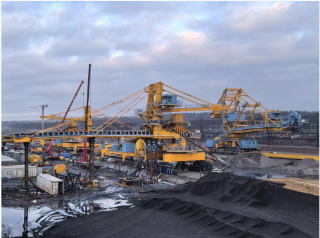
A bucket wheel stacker reclaimer integrates two essential functions within one stockyard system. During stacking, the equipment distributes incoming limestone across a designated storage area according to a planned stacking method. During reclaiming, the bucket wheel excavates material from the stockpile in a controlled sequence, allowing limestone from different layers to be combined into a more consistent material stream.
The effectiveness of this process depends on more than the equipment's rated capacity. Stockpile geometry, stacking patterns, reclaiming direction, bucket wheel configuration, and the chemical variability of the incoming limestone all influence blending performance. A properly engineered system coordinates these factors to support predictable material quality and reliable downstream production.
How Bucket Wheel Reclaiming Improves Limestone Homogeneity
Layered Stacking Creates the Foundation for Blending
Effective pre-blending begins with the way limestone is deposited. Chevron stacking, windrow stacking, and other longitudinal stacking arrangements can distribute material across multiple layers, depending on the stockyard design and operating strategy. Each layer represents a portion of the incoming material, creating opportunities to combine limestone with different chemical characteristics during subsequent reclaiming.
The selected stacking method should reflect the stockpile dimensions, material flow characteristics, available space, and required blending performance. Consistent stacking helps prevent unnecessary concentration of particular material grades in isolated sections of the stockpile.
Controlled Reclaiming Combines Different Material Layers
During reclaiming, the bucket wheel removes limestone from the stockpile while the machine moves along the reclaiming face. As material is collected from successive layers, the resulting discharge stream combines portions of limestone deposited at different times and with different compositions.
This mechanism helps reduce short-term variations in feed quality when the stockpile and reclaiming sequence are properly planned. The actual blending effect depends on the number of layers incorporated, the distribution of chemical variation within the stockpile, and the consistency of reclaiming operations. The equipment therefore serves as part of a broader pre-blending strategy rather than as an independent guarantee of uniform limestone quality.
Stable Discharge Supports Downstream Process Control
The reclaimed limestone is typically transferred through belt conveyors to subsequent material handling or raw grinding processes. A stable discharge rate allows downstream equipment to operate more consistently and helps plant operators coordinate material flow with production requirements.
For this reason, bucket wheel design, conveyor capacity, travel speed, and reclaiming control should be considered together. Matching these parameters to the required throughput helps prevent unnecessary interruptions and maintains a more predictable supply of pre-blended limestone.
Key Engineering Considerations for Limestone Pre-Blending Systems
Matching Equipment Capacity to Cement Plant Requirements
The rated handling capacity of a bucket wheel stacker reclaimer must correspond to the cement plant's limestone consumption, stockyard storage capacity, and conveyor system design. The stacking rate and reclaiming rate serve different operational purposes and should be evaluated separately. Reclaiming capacity, in particular, needs to meet the demand of the downstream raw material preparation process without creating unnecessary interruptions in material supply.
Capacity selection should also account for limestone bulk density, particle size distribution, moisture content, and the stockpile's physical dimensions. These parameters affect bucket filling, material discharge, conveyor loading, and the mechanical loads experienced by the equipment. Correctly coordinated specifications provide a more reliable basis for continuous operation.
Adapting the Machine to Stockyard Layout
Stockyard geometry directly influences the equipment's mechanical configuration. Rail gauge, travel distance, boom length, bucket wheel dimensions, slewing range, and available stacking height must be considered together when developing the overall arrangement. The design should provide sufficient working coverage while maintaining suitable clearances for the stockpile, conveyors, and surrounding structures.
Existing cement plants may require equipment that fits established civil foundations and conveyor routes, whereas new projects generally allow greater flexibility in stockyard planning. In either case, a site-specific design helps ensure that the machine's operating range corresponds to the intended storage and reclaiming arrangement.
Integrating Automation and Operating Controls
The control system coordinates the travel mechanism, bucket wheel drive, conveyors, and other moving components. Interlocks and operating sequences help maintain the correct equipment order, while position monitoring and travel limits support controlled movement throughout the stockyard.
Depending on project requirements, a bucket wheel stacker reclaimer can incorporate PLC-based control, remote operation, position detection, and automatic stacking or reclaiming functions. For limestone pre-blending, the control strategy should also support repeatable operating sequences, since consistent reclaiming patterns are important to achieving the intended blending effect.
Considering Wear Resistance and Maintenance Access
Limestone handling equipment operates in an environment where continuous material contact can cause wear to buckets, liners, chutes, conveyor components, and transfer points. The degree of wear depends on particle characteristics, throughput, moisture, and operating conditions. Selecting appropriate wear-resistant materials for critical components helps maintain equipment availability and reduces the frequency of component replacement.
Maintenance access should be considered during the design stage. Practical inspection points, accessible drive assemblies, replaceable wear parts, and clear maintenance procedures make routine servicing easier to organize. For cement plants operating long production shifts, these details are important to maintaining dependable material handling performance over the equipment's service life.
Selecting a Bucket Wheel Stacker Reclaimer Manufacturer for Cement Applications
Choosing a manufacturer requires an assessment of engineering capability as well as equipment specifications. A suitable supplier should understand the relationship between limestone characteristics, stockpile configuration, reclaiming performance, conveyor integration, and the operational requirements of cement production.
The manufacturer's ability to coordinate mechanical design, electrical systems, automation, fabrication, installation, and commissioning is equally important. When these elements are developed as one integrated solution, the resulting equipment can be matched more closely to the actual site conditions and operating objectives.
Jiangyin Dadi Equipment Co., Ltd. specializes in bulk material conveying equipment and high-end metallurgical equipment. Established in 2001, the company has developed manufacturing and engineering capabilities covering a range of stockyard machines, including bucket wheel stacker reclaimers and several types of scraper reclaimers. Its services include project consultation, customized design and manufacturing, installation, commissioning, technical training, maintenance support, and equipment upgrades.
For cement plant projects, this integrated service scope provides a basis for coordinating stockyard equipment with the wider material handling system. The appropriate configuration should be determined through project-specific engineering, taking into account required throughput, stockpile dimensions, limestone properties, operating methods, and the plant's existing infrastructure.
Conclusion
A bucket wheel stacker reclaimer for limestone pre-blending is more than a bulk material handling machine. It is an integral part of the cement plant's raw material quality management system, connecting stockyard storage, controlled reclaiming, and continuous limestone supply.
The effectiveness of the system depends on coordinated stacking and reclaiming methods, appropriate capacity selection, well-matched conveyor arrangements, reliable automation, and practical maintenance provisions. When these elements are considered together, the equipment can support more consistent limestone feeding and efficient stockyard operation.
Jiangyin Dadi Equipment Co., Ltd. combines bulk material handling equipment manufacturing with engineering, installation, commissioning, and technical support services. Its experience in industrial material yard equipment provides a foundation for developing bucket wheel stacker reclaimer solutions tailored to cement plant requirements. A project-specific approach to equipment selection helps ensure that the final configuration aligns with the plant's material characteristics, production capacity, and stockyard layout.