Understanding Roller Conveyor Equipment in Plate Production Lines: Functions and Benefits
02 Mar.2026
In modern industrial manufacturing, roller conveyor equipment plays a pivotal role in streamlining material handling, especially in plate production lines for metals, composites, and wood products. By automating the movement of heavy plates, roller conveyors improve production efficiency, reduce labor costs, and enhance workplace safety.
This article explores how roller conveyor systems function, their advantages in plate production, key design considerations, and the role of companies like Jiangyin Dadi Equipment Co., Ltd. Company Background in supplying reliable industrial conveyor solutions.
What Is Roller Conveyor Equipment?
A roller conveyor is a material handling system composed of a series of cylindrical rollers supported in a frame. Plates or flat materials are placed on the rollers, and the rollers allow them to move easily along the conveyor path.
Depending on the system design, rollers can be:
Gravity rollers – rely on the weight of the plate and inclined surfaces to move items.
Powered rollers – use motors to drive the rollers for automated material transport.
Chain-driven rollers – rollers connected via chains to handle heavier loads.
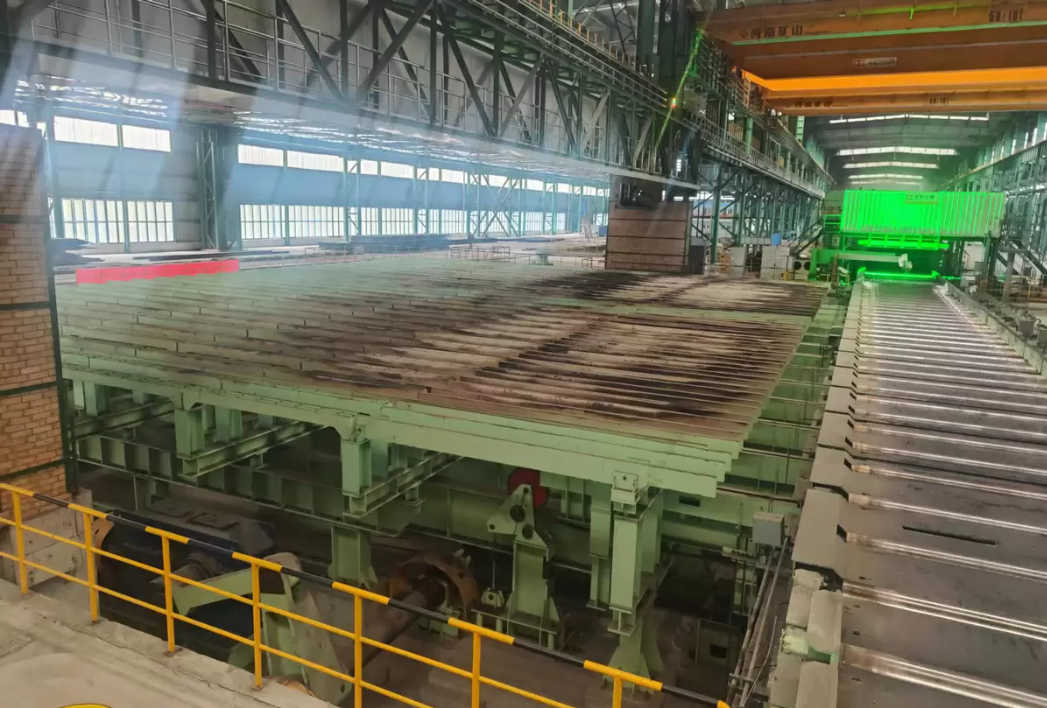
Roller conveyors are widely used in plate production lines because they reduce manual handling and can support large, heavy, and awkwardly shaped materials with consistent motion.
Key Functions of Roller Conveyors in Plate Production
1. Material Transportation
The primary function is to move plates efficiently between production stages, such as:
Cutting and sizing
Polishing or grinding
Coating or finishing
Packaging and storage
Automated rollers reduce bottlenecks, enabling smoother flow along the production line.
2. Accumulation and Buffering
Roller conveyors can be configured with accumulation zones, allowing plates to temporarily queue before the next processing step. This helps maintain continuous workflow even if downstream machines operate at variable speeds.
3. Orientation and Positioning
Specialized roller designs allow plates to be rotated, aligned, or precisely positioned for downstream machining, drilling, or coating processes. This ensures accuracy and repeatability, critical in high-precision production lines.
4. Load Distribution and Weight Management
Roller conveyors can support very heavy plates by distributing weight evenly across multiple rollers, reducing strain on machinery and minimizing material damage.
Benefits of Using Roller Conveyors in Plate Production Lines
1. Increased Efficiency and Productivity
Automation of plate movement reduces manual labor, allowing workers to focus on high-value tasks and significantly increasing throughput in production lines.
2. Enhanced Safety
By reducing the need for lifting and carrying heavy plates, roller conveyors lower the risk of workplace injuries.
3. Flexibility and Scalability
Modular conveyor systems can be customized to fit different production layouts or expanded as production volume grows. Various roller types, speeds, and control mechanisms can be adapted to line requirements.
4. Cost Savings
Automating material handling reduces labor costs, minimizes downtime, and decreases the likelihood of material damage, leading to long-term operational savings.
5. Integration with Automation and Smart Systems
Modern roller conveyor systems can be integrated with sensors, PLCs, and automated controls to synchronize with production machines, providing real-time monitoring, data collection, and predictive maintenance capabilities.
Jiangyin Dadi Equipment Co., Ltd.’s Role in Roller Conveyor Solutions
Jiangyin Dadi Equipment Co., Ltd. Company Background is a leading manufacturer of industrial conveyor and material handling equipment, specializing in solutions for plate production lines, steel, aluminum, and composite materials.
Key offerings include:
Custom roller conveyor systems tailored to specific production layouts
Motorized and gravity roller solutions for different plate sizes and weights
Integration services for automated production lines
Technical support and maintenance services to ensure reliable operation
By partnering with suppliers like Jiangyin Dadi, manufacturers can implement optimized material flow, reduce downtime, and maintain high production standards.
Applications in Modern Plate Production
Metal Fabrication – Transporting steel, aluminum, or stainless steel plates between cutting, finishing, and packaging stages.
Composite Material Lines – Handling large composite panels for aerospace, automotive, or construction.
Wood and Furniture Manufacturing – Moving plywood, MDF, and other sheet materials efficiently.
Coating and Painting Lines – Moving plates through chemical, paint, or powder coating processes with minimal human intervention.
Roller conveyors are versatile and can be combined with other handling systems like lifts, turntables, and automated storage for full production line optimization.
Common Engineering Considerations
When designing a roller conveyor system for plate production, engineers should consider:
Plate size, weight, and material type – determines roller spacing and strength
Line speed and throughput – affects motor sizing and control systems
Environmental conditions – temperature, dust, and moisture may require special rollers or coatings
Automation compatibility – integration with sensors, PLCs, and other machines for seamless operation
Maintenance access – easy replacement of rollers, bearings, and motors
Frequently Asked Questions
Q: Can roller conveyors handle very heavy plates? A: Yes, industrial roller conveyors can be designed to support plates weighing several tons by distributing weight across multiple rollers or using chain-driven systems.
Q: What is the difference between gravity and powered roller conveyors? A: Gravity conveyors rely on inclination and manual push, while powered conveyors use motors to automate plate movement and maintain consistent speeds.
Q: Can roller conveyors be integrated with automated production lines? A: Absolutely. Modern roller conveyors can be synchronized with machinery, controlled via PLCs, and monitored with sensors for real-time production management.
Q: How flexible are roller conveyor systems for different plate sizes? A: Most systems are modular and adjustable. Roller spacing, motor speed, and conveyor width can be customized to accommodate varying plate dimensions.
Conclusion
Roller conveyor equipment is essential for modern plate production lines, providing efficient, safe, and reliable material handling. By automating the movement, alignment, and buffering of plates, conveyor systems increase throughput, reduce labor costs, and support consistent high-quality production.
Companies like Jiangyin Dadi Equipment Co., Ltd. deliver tailored conveyor solutions that integrate seamlessly into industrial production lines, enabling manufacturers to achieve maximum efficiency and operational excellence. Whether in metal, composite, or wood plate production, roller conveyors remain a cornerstone of modern automated manufacturing.
This website uses cookies to provide you with a safer and more personal experience. By accepting, you agree to the Cookie Policy and the use of cookies for advertising and analytics purposes.
Platform information submission - privacy agreement
● Privacy Policy
We are committed to protecting the privacy, personal data and personal data (collectively referred to as "personal data") provided by you when using this website. Make us comply with the highest standards in terms of collection, use, storage and transmission of personal data (laws and regulations related to privacy of personal data) and consumer protection. To ensure that you have full confidence in the handling of personal data on this website, you must carefully read and understand the provisions of the privacy policy. This website (hereinafter referred to as "us") respects and protects the privacy of users. In particular, once you use this website, you will be deemed to accept, agree, promise and confirm this privacy agreement; You disclose your personal data to us voluntarily with the required consent; You will abide by any modification of this privacy policy; You agree that our relevant business personnel will contact you regarding the products and services you may be interested in (unless you have indicated that you do not want to receive such messages). With your consent, we will collect, manage and monitor the types of personal data collected.
1. Scope of application
It is our unremitting pursuit to provide users with better, better and more personalized services. We also hope that the services we provide will be more convenient for your needs. This privacy policy applies to all information collection services provided by this website. You can visit this website and use the services provided by this website using this privacy policy.
2. What information do we collect
In order to provide you with our various services, you need to provide personal data information, including personal data and anonymous data, including but not limited to: personal data (your name, gender, age, date of birth, telephone number, fax number, address or mailing address, e-mail address, etc.).
3. How to use the collected information
The purposes and purposes of collecting personal data and anonymous data are as follows: to provide you with our services through this website; When you use our website, you can identify and confirm your identity; Let you get the service for you when you use this website; The relevant business personnel of this website can contact you when necessary; Make it more convenient for you to use this website; The personal data and anonymous data provided by you to us will only be retained until the collection purpose has been achieved, unless they are retained due to applicable laws and regulations. The ownership of personal data and disclosure of all data collected on our website are owned by us and will not be leased or sold to any unrelated third party.
4. How do we protect information
For the protection of personal data, we implement appropriate physical, electronic and management measures to protect and guarantee the safety of your personal data. We try our best to ensure that any personal data collected through this website is free from any nuisance of a third party unrelated to us. The security measures we take are not limited to: physical measures: the records with your personal data will be stored in a locked place Electronic measures: the computer data with your personal data will be stored in the computer system and storage media subject to strict login restrictions Management measures: only employees authorized by us can access your personal data, These employees need to comply with our internal rules on the confidentiality of personal data. If you are aware of any security loopholes on this website, please contact us in time so that we can take appropriate actions as soon as possible; Despite the implementation of the above security measures, we cannot guarantee the absolute security of data transmission on the Internet, so we cannot absolutely guarantee that the personal data and anonymous data you provide to us through this website are safe at all times. We will not be responsible for any unauthorized access to your personal data, and we will not be responsible for any losses and damages incurred or caused in this regard.
5. Juvenile Protection Law
The minor has provided personal data to this website without the approval or consent of any parent or guardian. Please contact the public telephone number and customer service telephone number on this website in time to ensure that the data are removed.
6. Revision and effectiveness of privacy policy
With the expansion of the service scope of this website, we may revise the Legal Statement and Privacy Policy from time to time, which forms a part of this Legal Statement and Privacy Policy. In order to prevent you from being informed of such revisions, please read this Legal Statement and Privacy Policy frequently. In any way, if you continue to use our services, you agree to be bound by the revised Legal Statement and Privacy Policy.
Address: No. 290, Chuangxin Avenue, National High-Tech Industrial Development Zone, Jiangyin City, Jiangsu Province