Industrial Roller Conveyor Solutions for Heavy Plate and Steel Handling
16 Mar.2026
Efficient material handling is the backbone of modern steel manufacturing and processing industries. Managing heavy plates, slabs, and steel components requires robust, reliable, and high-performance conveyor systems. Among various options, industrial roller conveyors have proven to be indispensable for handling heavy materials safely and efficiently.
For factories aiming to enhance production flow, reduce labor costs, and improve workplace safety, selecting the right roller conveyor solution is critical. This article explores the benefits, applications, and considerations of industrial roller conveyor systems, highlighting solutions provided by Dadi, a leading conveyor equipment manufacturer.
What Are Industrial Roller Conveyors?
Industrial roller conveyorsare mechanical systems that use cylindrical rollers mounted in a frame to move heavy materials along a controlled path. These conveyors can be powered or gravity-driven, depending on production requirements.
Key features include:
Load-bearing capacity for heavy steel plates and slabs
Modular design for flexible layout configurations
Durable rollers that reduce wear on transported materials
Ease of integration with automated production lines
These conveyors are widely used in steel processing, shipbuilding, metal fabrication, and heavy plate handling facilities.
Why Industrial Roller Conveyors Are Essential for Steel Handling
Heavy plate and steel handling present unique challenges, such as extreme material weight, size variability, and safety risks. Roller conveyor solutions address these challenges in several ways:
1. High Load Capacity
Industrial roller conveyors are designed to carry extremely heavy loads, often several tons per section. High-strength rollers and reinforced frames ensure safe transport of steel plates and slabs.
2. Smooth and Continuous Material Flow
With properly aligned rollers and powered drive systems, conveyors enable continuous material movement, reducing bottlenecks in production and minimizing the need for manual handling.
3. Enhanced Safety
Manually moving heavy plates is risky. Conveyor systems reduce physical strain on workers, minimize workplace accidents, and improve overall operational safety.
4. Integration With Automation
Industrial roller conveyors can be integrated with automated lifting devices, cutting machines, or storage systems, creating a seamless material handling workflow.
Key Features of Industrial Roller Conveyor Solutions
When selecting a conveyor for heavy plate and steel handling, consider these essential features:
1. Roller Material and Durability
Steel or alloy rollers for high-load resistance
Surface treatments to resist wear and corrosion
Maintenance-friendly roller bearings
2. Frame Strength and Stability
The frame should be engineered to support maximum load with minimal deflection. Reinforced steel or welded structures are common for heavy-duty applications.
3. Drive System Options
Motorized rollers for continuous power-driven transport
Chain-driven or belt-driven rollers for specific heavy load needs
Variable speed controls for precise material handling
4. Modular and Expandable Design
Flexible modular designs allow factories to adapt conveyor layouts to production changes or expansions without major structural modifications.
5. Safety Features
Emergency stop systems
Guarding around moving rollers
Load sensors to prevent overloading
Applications of Roller Conveyors in Steel Handling
Industrial roller conveyors are used in various stages of steel production and processing:
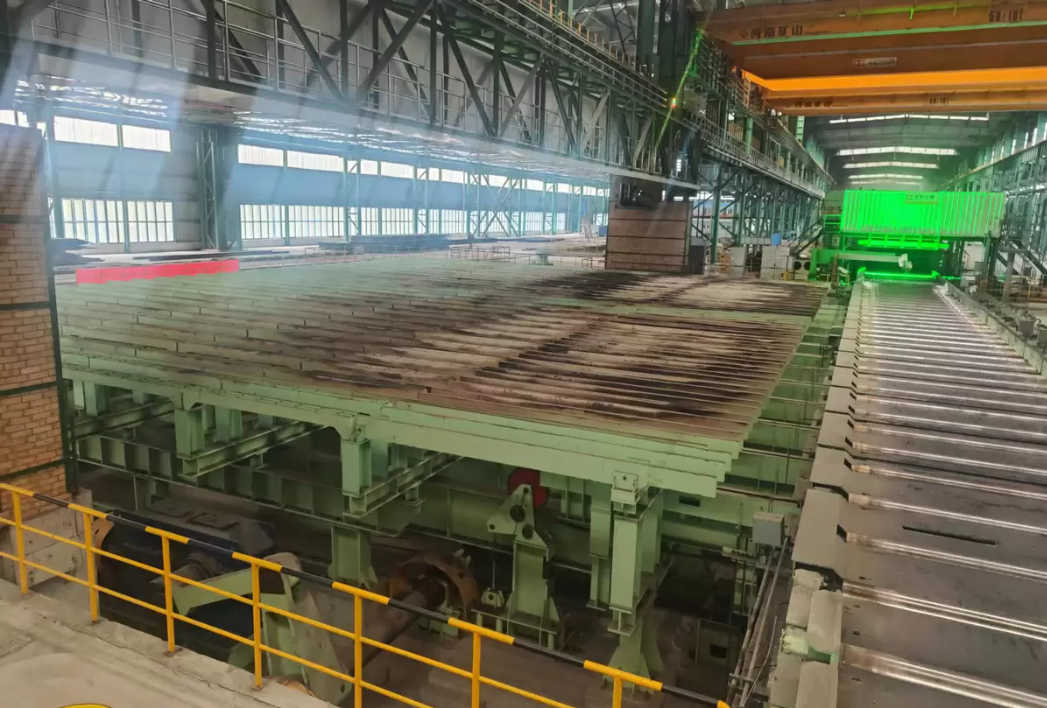
Heavy Plate Transportation – Moving thick steel plates between storage and cutting machines
Slab Handling – Transporting slabs in rolling mills or heat treatment lines
Sheet and Coil Movement – Handling large steel sheets or coils in fabrication plants
Finished Product Transfer – Moving processed steel products to storage or shipping areas
By optimizing material flow, these conveyors reduce handling time, minimize damage, and improve overall plant efficiency.
Why Choose Dadi for Industrial Roller Conveyors
Dadi is a leading manufacturer specializing in industrial roller conveyors, steel handling solutions, and heavy material transportation equipment. Their expertise spans design, manufacturing, and installation of high-performance conveyor systems tailored for heavy-duty applications.
Advantages of Dadi Solutions
Custom Design: Tailored systems for steel mills, fabrication plants, and heavy plate workshops
Durable Construction: High-strength frames and rollers designed for long-term industrial use
Automation Integration: Seamless compatibility with lifting, cutting, and storage systems
Technical Support: Comprehensive after-sales service and maintenance support
You can learn more about Dadi and their industrial solutions here: Dadi Official Website
Tips for Selecting the Right Conveyor for Heavy Plate Handling
Assess Load Requirements: Determine maximum plate weight and size for proper roller selection
Consider Conveyor Length and Layout: Ensure modular design fits production floor and workflow
Evaluate Drive Systems: Choose between gravity, motorized, or chain-driven systems based on throughput needs
Plan for Maintenance: Select durable rollers and accessible bearings for easier servicing
Integrate Safety Features: Include emergency stops, load sensors, and protective guarding
Investing in the right conveyor system reduces downtime, increases safety, and improves efficiency.
Frequently Asked Questions (FAQ)
1. What materials are industrial roller conveyors made from?
Typically, conveyors use high-strength steel, alloy rollers, and reinforced frames designed for heavy loads and industrial durability.
2. Can roller conveyors handle extremely heavy steel plates?
Yes. Industrial roller conveyors are engineered for multi-ton loads, with reinforced rollers and frames to safely transport heavy plates.
3. Are roller conveyors compatible with automation systems?
Absolutely. Modern conveyors can integrate with robots, lifting equipment, and cutting machines for fully automated material handling.
4. How is maintenance performed on roller conveyors?
Maintenance usually includes lubricating bearings, replacing worn rollers, and checking drive mechanisms. Modular designs make these tasks easier.
5. Why choose Dadi for industrial roller conveyors?
Dadi provides customized, durable, and high-performance conveyor solutions with expert technical support, ideal for heavy plate and steel handling industries.
Conclusion
Industrial roller conveyors are essential for efficient and safe heavy plate and steel handling. They improve production flow, reduce labor risks, and support automation in modern steel processing plants.
By selecting high-quality conveyor solutions from experienced manufacturers like Dadi, companies can optimize their material handling processes, improve operational efficiency, and extend the lifespan of equipment. Investing in the right industrial conveyor is a strategic decision that enhances productivity, safety, and competitiveness in steel manufacturing.
This website uses cookies to provide you with a safer and more personal experience. By accepting, you agree to the Cookie Policy and the use of cookies for advertising and analytics purposes.
Platform information submission - privacy agreement
● Privacy Policy
We are committed to protecting the privacy, personal data and personal data (collectively referred to as "personal data") provided by you when using this website. Make us comply with the highest standards in terms of collection, use, storage and transmission of personal data (laws and regulations related to privacy of personal data) and consumer protection. To ensure that you have full confidence in the handling of personal data on this website, you must carefully read and understand the provisions of the privacy policy. This website (hereinafter referred to as "us") respects and protects the privacy of users. In particular, once you use this website, you will be deemed to accept, agree, promise and confirm this privacy agreement; You disclose your personal data to us voluntarily with the required consent; You will abide by any modification of this privacy policy; You agree that our relevant business personnel will contact you regarding the products and services you may be interested in (unless you have indicated that you do not want to receive such messages). With your consent, we will collect, manage and monitor the types of personal data collected.
1. Scope of application
It is our unremitting pursuit to provide users with better, better and more personalized services. We also hope that the services we provide will be more convenient for your needs. This privacy policy applies to all information collection services provided by this website. You can visit this website and use the services provided by this website using this privacy policy.
2. What information do we collect
In order to provide you with our various services, you need to provide personal data information, including personal data and anonymous data, including but not limited to: personal data (your name, gender, age, date of birth, telephone number, fax number, address or mailing address, e-mail address, etc.).
3. How to use the collected information
The purposes and purposes of collecting personal data and anonymous data are as follows: to provide you with our services through this website; When you use our website, you can identify and confirm your identity; Let you get the service for you when you use this website; The relevant business personnel of this website can contact you when necessary; Make it more convenient for you to use this website; The personal data and anonymous data provided by you to us will only be retained until the collection purpose has been achieved, unless they are retained due to applicable laws and regulations. The ownership of personal data and disclosure of all data collected on our website are owned by us and will not be leased or sold to any unrelated third party.
4. How do we protect information
For the protection of personal data, we implement appropriate physical, electronic and management measures to protect and guarantee the safety of your personal data. We try our best to ensure that any personal data collected through this website is free from any nuisance of a third party unrelated to us. The security measures we take are not limited to: physical measures: the records with your personal data will be stored in a locked place Electronic measures: the computer data with your personal data will be stored in the computer system and storage media subject to strict login restrictions Management measures: only employees authorized by us can access your personal data, These employees need to comply with our internal rules on the confidentiality of personal data. If you are aware of any security loopholes on this website, please contact us in time so that we can take appropriate actions as soon as possible; Despite the implementation of the above security measures, we cannot guarantee the absolute security of data transmission on the Internet, so we cannot absolutely guarantee that the personal data and anonymous data you provide to us through this website are safe at all times. We will not be responsible for any unauthorized access to your personal data, and we will not be responsible for any losses and damages incurred or caused in this regard.
5. Juvenile Protection Law
The minor has provided personal data to this website without the approval or consent of any parent or guardian. Please contact the public telephone number and customer service telephone number on this website in time to ensure that the data are removed.
6. Revision and effectiveness of privacy policy
With the expansion of the service scope of this website, we may revise the Legal Statement and Privacy Policy from time to time, which forms a part of this Legal Statement and Privacy Policy. In order to prevent you from being informed of such revisions, please read this Legal Statement and Privacy Policy frequently. In any way, if you continue to use our services, you agree to be bound by the revised Legal Statement and Privacy Policy.
Address: No. 290, Chuangxin Avenue, National High-Tech Industrial Development Zone, Jiangyin City, Jiangsu Province