Cold rolling equipment plays an important role in modern steel processing, enabling manufacturers to achieve precise dimensions, consistent surface quality, and improved material properties. Reliable equipment manufacturing requires more than mechanical fabrication. It involves engineering design, precision machining, component assembly, system integration, and strict quality inspection to ensure stable performance throughout the production line.
Understanding Cold Rolling Equipment Manufacturing
Cold rolling equipment is designed to process metal materials through controlled deformation at temperatures below their recrystallization temperature. Unlike hot rolling, cold rolling places greater emphasis on dimensional accuracy, surface finish, thickness consistency, and process control.
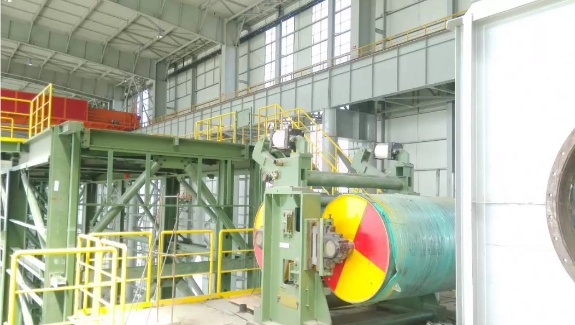
A complete cold rolling production line may include rolling mills, roller tables, tension control devices, hydraulic systems, electrical control units, and auxiliary handling equipment. Each component has a specific function, but their performance must be coordinated to maintain continuous and stable production.
From a manufacturing perspective, equipment quality depends on the relationship between structural design, machining precision, mechanical strength, and control system integration. Even small deviations in roller alignment or transmission accuracy can influence the final strip quality. Therefore, cold rolling equipment manufacturing requires a systematic approach that connects engineering design with practical production requirements.
Key Production Processes in Cold Rolling Equipment Manufacturing
Engineering Design and Technical Planning
Manufacturing begins with an evaluation of the customer's production requirements, including material specifications, rolling capacity, operating speed, dimensional tolerances, and factory layout. Engineers use these parameters to determine equipment configuration, structural dimensions, drive arrangements, and auxiliary system requirements.
Mechanical design must account for rolling forces, vibration, thermal effects, and long-term operating loads. Hydraulic and electrical systems are also planned at this stage to ensure that the equipment can operate as an integrated production unit.
Raw Material Selection and Preparation
Steel plates, structural sections, shafts, rollers, and other mechanical components must be selected according to their intended functions. Load-bearing structures require suitable strength and weldability, while precision components need appropriate material properties and machining allowances.
Incoming materials are inspected for dimensions, surface defects, and material conformity before entering production. Proper preparation provides a reliable foundation for subsequent fabrication and assembly.
Cutting, Welding, and Structural Fabrication
Large equipment frames and supporting structures are manufactured through cutting, forming, and welding processes. CNC cutting equipment helps achieve accurate component dimensions, while controlled welding procedures ensure structural integrity.
After welding, important structures may undergo stress-relief treatment or dimensional correction where required. This helps reduce residual stress and improves stability during subsequent machining and operation.
Precision Machining and Component Processing
Precision machining is essential for manufacturing roller shafts, bearing seats, mounting surfaces, transmission components, and other critical parts. CNC lathes, milling machines, boring machines, and grinding equipment are used to achieve specified tolerances and surface finishes.
For cold rolling equipment, machining accuracy directly affects assembly alignment, rotational stability, and transmission performance. Critical dimensions must therefore be inspected throughout processing rather than only after machining is completed.
Manufacturing Technologies Used in Cold Rolling Equipment
CNC Machining Technology
CNC machining is widely used in the production of high-precision mechanical components. It provides consistent dimensional accuracy and repeatability when processing shafts, rollers, bearing housings, and complex structural parts. Large-scale CNC boring and milling machines are particularly important for equipment with substantial dimensions and strict assembly requirements.
Hydraulic and Drive System Integration
Hydraulic systems provide controlled force and movement for equipment operations, while mechanical transmission systems deliver the required torque and rotational speed. Their design must consider load distribution, operating stability, response accuracy, and maintenance accessibility.
Proper integration of hydraulic, electrical, and mechanical systems helps ensure coordinated equipment operation and reliable production performance.
Automation and Electrical Control
Modern cold rolling equipment relies on electrical control systems to coordinate motors, sensors, actuators, and operating mechanisms. Control accuracy influences production consistency, equipment synchronization, and operational safety.
Depending on production requirements, automation systems can incorporate monitoring functions, speed regulation, position control, and operating data management.
Equipment Assembly and Commissioning
After individual components pass inspection, equipment enters the assembly stage. Engineers check installation dimensions, shaft alignment, bearing clearances, transmission connections, and hydraulic piping.
Mechanical and electrical commissioning follows assembly. No-load and functional tests help verify equipment movement, control response, system coordination, and operating stability before delivery.
Quality Control in Cold Rolling Equipment Manufacturing
Quality control must cover the entire manufacturing process rather than relying exclusively on final inspection.
Material and Component Inspection
Incoming materials should be checked against technical specifications, including material grades, dimensions, and surface conditions. Critical components require additional inspection to verify mechanical properties and processing accuracy.
Welding and Structural Quality Inspection
Welded structures must meet specified strength and dimensional requirements. Visual inspection and appropriate nondestructive testing methods, such as ultrasonic or magnetic particle testing, can be applied according to component importance and project standards.
Machining Accuracy Verification
Precision components should be inspected for dimensional tolerances, concentricity, flatness, and surface roughness. Measuring instruments and coordinate measurement equipment help verify whether finished components meet engineering drawings.
Assembly and Performance Testing
Final inspection covers mechanical alignment, lubrication, hydraulic pressure, electrical connections, and control functions. Equipment testing verifies that individual units and integrated systems perform according to agreed technical requirements.
Maintaining inspection records and manufacturing documentation also improves traceability and supports consistent quality management.
Jiangyin Dadi Equipment Co., Ltd.: Metallurgical Equipment Manufacturing Expertise
Jiangyin Dadi Equipment Co., Ltd. was established in 2001 and specializes in high-end metallurgical equipment and bulk material conveying equipment. The company has developed manufacturing capabilities covering engineering design, equipment fabrication, installation, commissioning, and technical support.
Its main product categories include rolling line auxiliary equipment and bulk material handling systems. For rolling production lines, its product portfolio includes plate cooling beds, bar cooling beds, section steel cooling beds, steel pipe cooling beds, and stainless steel cold rolling equipment.
The company operates standardized manufacturing workshops and employs engineering and technical personnel to support equipment development and production. Its manufacturing infrastructure includes CNC gantry boring and milling machines, CNC lathes, machining equipment, and large-scale assembly facilities.
Dadi has also established quality management and production management systems, including ISO 9001 quality management system certification. Its experience in metallurgical equipment manufacturing provides a foundation for handling equipment projects involving mechanical structures, hydraulic systems, and electrical control integration.
For customers requiring cold rolling equipment and related production line machinery, Dadi provides project-oriented services covering design, manufacturing, installation, commissioning, and after-sales support. This integrated approach helps coordinate equipment specifications with actual production requirements.
Conclusion
Cold rolling equipment manufacturing is a comprehensive engineering process involving technical design, material preparation, precision fabrication, mechanical assembly, and systematic quality control. Manufacturing accuracy and reliable system integration directly influence equipment stability and production consistency.
Selecting an experienced equipment manufacturer is therefore essential for building dependable rolling production facilities. With its metallurgical equipment experience, manufacturing infrastructure, and integrated project services, Jiangyin Dadi Equipment Co., Ltd. provides equipment solutions for industrial rolling line applications.