Cold rolling equipment plays an essential role in modern steel processing and metal fabrication. By reducing metal thickness at room temperature, cold rolling improves dimensional accuracy, surface quality, and mechanical properties, making it an important production process for industries that require high-quality steel products.
Understanding Cold Rolling Equipment and Its Working Principles
Cold rolling equipment is designed to process metal strips, sheets, and coils through a series of rotating rolls under controlled pressure. Unlike hot rolling, which takes place at elevated temperatures, cold rolling is generally performed below the metal's recrystallization temperature. This allows manufacturers to achieve tighter thickness tolerances, smoother surfaces, and improved material strength.
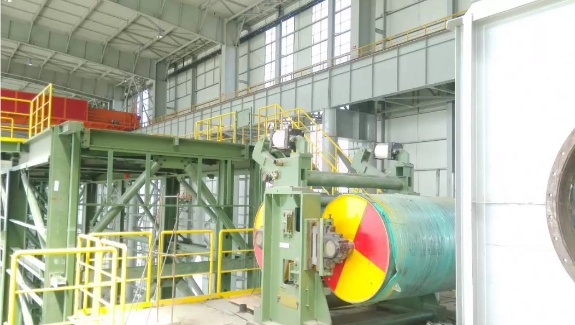
During the rolling process, metal passes through the gap between work rolls, where compressive forces reduce its thickness and modify its mechanical properties. Depending on production requirements, cold rolling lines may include uncoiling systems, rolling stands, tension control equipment, lubrication systems, automatic thickness control, and recoiling units.
Modern cold rolling equipment integrates mechanical engineering, hydraulic technology, electrical control, and automated production systems. These components work together to maintain stable rolling pressure, consistent strip tension, and precise dimensional control throughout production.
Key Industrial Applications of Cold Rolling Equipment
Cold rolling equipment is widely used across steel manufacturing and metal fabrication because it can produce steel materials with consistent dimensions and excellent surface characteristics.
Automotive Manufacturing
The automotive industry relies on cold-rolled steel for body panels, structural components, chassis parts, and precision metal fittings. These applications require accurate thickness control, good surface finish, and reliable mechanical properties. Cold rolling helps produce steel sheets suitable for subsequent stamping, forming, welding, and coating processes.
Construction and Building Materials
Cold-rolled steel is commonly used in roofing systems, wall panels, metal framing, doors, and structural accessories. Its dimensional consistency and smooth surface make it suitable for applications involving precise forming and finishing. Cold rolling equipment supports the production of steel strips and sheets with specifications adapted to different construction requirements.
Home Appliances and Electrical Equipment
Refrigerators, washing machines, air conditioners, and electrical cabinets frequently use cold-rolled steel sheets. These products require uniform thickness and attractive surface quality to ensure accurate component fabrication and reliable assembly. Cold rolling provides the material consistency needed for cutting, bending, stamping, and surface treatment.
Metal Fabrication and Industrial Machinery
In general metal fabrication, cold-rolled steel is used to manufacture machine housings, precision components, storage systems, metal enclosures, and industrial equipment parts. Its improved dimensional accuracy helps manufacturers maintain tighter production tolerances and achieve consistent finished products.
Steel Service Centers
Steel service centers use cold rolling equipment to process metal coils into products with specific thicknesses, widths, and surface requirements. These processed materials can then be supplied to downstream manufacturers for further fabrication, helping establish a more efficient steel supply chain.
How Cold Rolling Improves Steel Product Quality
The value of cold rolling extends beyond thickness reduction. It directly influences several material characteristics that determine the suitability of steel for industrial applications.
One important benefit is improved dimensional precision. Controlled roll gaps and automated thickness measurement systems help maintain consistent strip thickness throughout the production process. This is particularly important for applications involving precision stamping, deep drawing, and automated assembly.
Cold rolling also produces a smoother and more uniform surface compared with conventional hot-rolled products. This makes cold-rolled steel suitable for painting, electroplating, galvanizing, and other surface finishing operations.
Another important effect is work hardening. As steel undergoes plastic deformation during cold rolling, its strength and hardness generally increase, while ductility decreases. Depending on the intended application, manufacturers may introduce an annealing process to restore ductility and obtain the required mechanical properties.
Through appropriate control of rolling reduction, tension, lubrication, and processing parameters, manufacturers can produce steel materials that meet specific industrial performance requirements.
Main Components of an Industrial Cold Rolling Line
A complete cold rolling production line consists of multiple interconnected systems, each performing a specific function to ensure continuous and stable operation.
The uncoiler feeds the steel strip into the rolling line at a controlled speed. Rolling stands apply the required compressive force to reduce material thickness, while hydraulic systems provide accurate roll gap adjustment and pressure control.
Tension control equipment maintains appropriate strip tension before and after the rolling stands. This is essential for reducing strip deformation irregularities and maintaining stable production conditions. Lubrication and cooling systems help control friction and temperature, protecting work rolls while supporting consistent surface quality.
Finally, the recoiler collects the processed steel strip into coils for storage, transportation, or subsequent manufacturing operations. Modern production lines may also incorporate automated inspection, thickness measurement, and integrated control systems to improve production consistency.
Factors to Consider When Selecting Cold Rolling Equipment
Selecting suitable cold rolling equipment requires a clear understanding of production objectives and material specifications. Different steel products require different rolling forces, equipment configurations, and control capabilities.
Material type and thickness reduction requirements are important starting points. The equipment must provide sufficient rolling force and appropriate roll dimensions to process the intended steel grades and product specifications.
Production capacity is another key consideration. Manufacturers should evaluate line speed, coil dimensions, operating continuity, and overall production efficiency according to their manufacturing requirements.
Equipment precision and automation capabilities also deserve attention. Reliable hydraulic control, tension regulation, thickness monitoring, and electrical systems contribute to stable product quality. In addition, manufacturing quality, equipment installation, maintenance support, and supplier experience influence the long-term operational value of a cold rolling line.
Jiangyin Dadi Equipment Co., Ltd.: Professional Metallurgical Equipment Manufacturing
Founded in 2001, Jiangyin Dadi Equipment Co., Ltd. is a private enterprise specializing in bulk materials conveying equipment and high-end metallurgical equipment. With a registered capital of RMB 120 million, the company covers more than 150 acres and operates over 70,000 square meters of standardized workshops. It employs more than 400 people, including over 100 engineers and management professionals.
Dadi Equipment has established a strong manufacturing foundation supported by advanced processing and production equipment, a comprehensive quality inspection system, and an innovative management approach. These capabilities provide solid support for the manufacturing of industrial equipment used in demanding metallurgical production environments.
The company has continuously strengthened its digital management capabilities. It introduced an ERP management information system in 2009, implemented an OA office system in 2020, and adopted an MES production management system in 2023. These systems support production coordination, process management, and manufacturing efficiency.
Quality and standardized operations are also central to the company's management philosophy. Dadi Equipment has obtained ISO9001 quality management system, ISO14001 environmental management system, and ISO45001 occupational health and safety management system certifications. It has also received qualifications including AAA Credit Grade Certificate, High and New Technology Enterprise, and Jiangsu Private Science and Technology Enterprise.
In terms of technological development, Dadi Equipment owns hundreds of utility model patents and 16 invention patents, demonstrating its continued investment in engineering innovation and equipment development. With its extensive manufacturing facilities, experienced technical team, and established quality management systems, the company provides professional equipment manufacturing capabilities for the metallurgical industry.
Conclusion
Cold rolling equipment is indispensable in modern steel processing and metal fabrication. Its ability to improve thickness accuracy, surface quality, and material strength makes it essential for automotive manufacturing, construction, home appliances, industrial machinery, and steel service centers.
Choosing appropriate equipment requires careful consideration of material specifications, production capacity, process control, and manufacturing quality. With more than two decades of industry experience, advanced production facilities, professional engineering resources, and strong technological capabilities, Jiangyin Dadi Equipment Co., Ltd. provides a solid manufacturing foundation for high-end metallurgical equipment and industrial production applications.