Selecting the right bulk material conveying equipment is an important part of building an efficient industrial material handling system. Equipment such as stacker reclaimers, scraper reclaimers, stackers, and tripper carriages must be matched to the material, stockyard layout, handling capacity, and production process.
For industrial buyers, the key is to look beyond equipment price and choose a solution that fits the actual operating conditions.
Understanding Bulk Material Conveying Equipment
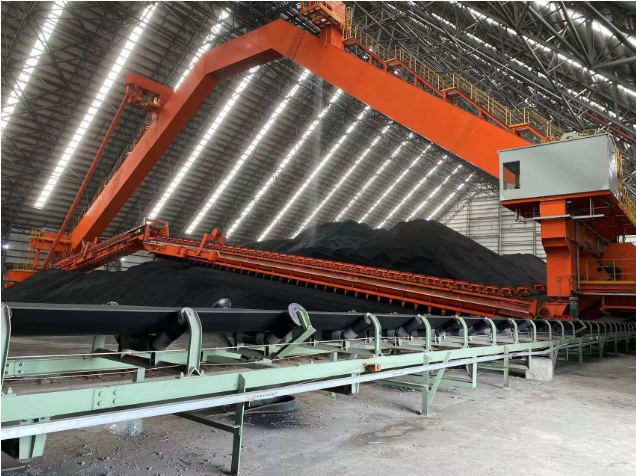
Bulk material conveying equipment is designed to transport, stockpile, distribute, and reclaim large quantities of loose materials. It is widely used for handling iron ore, coal, limestone, coke, minerals, and other raw materials in steel plants, mines, cement plants, power plants, ports, and material storage yards.
A complete bulk material handling system may contain several types of equipment working together. Material can be transferred from receiving systems to conveyors, stored in a stockyard by a stacker, and later recovered by a reclaimer before being sent to the next stage of production.
Because each part of the system affects the others, equipment selection should begin with the overall material flow rather than a single machine.
Start with the Material Characteristics
The physical properties of the bulk material have a direct influence on equipment selection.
Bulk density is important when calculating the actual load that conveying and reclaiming equipment needs to handle. Particle size affects material flow and the design of chutes, buckets, scrapers, and other contact components. Moisture content can also influence flowability, particularly when wet material tends to stick or compact.
Abrasiveness should receive particular attention when selecting wear-resistant components. Materials such as iron ore and limestone can cause considerable wear on scraper chains, sprockets, buckets, chutes, and other parts that remain in continuous contact with the material.
The angle of repose is another useful parameter when designing stockpiles. It affects the shape and volume of the stored material and can influence the working range of the reclaiming equipment.
For these reasons, equipment specifications should be based on actual material data whenever possible.
Calculate the Required Handling Capacity
Capacity is one of the first specifications industrial buyers usually consider, but the required value should be determined from the complete production process.
For example, a raw material yard supplying a steel plant may need to maintain a steady flow of iron ore, coal, limestone, or other materials to downstream equipment. If the reclaiming rate is lower than the production requirement, the material handling system can become a limiting point in the process.
The calculation should take into account normal operating capacity as well as peak material flow. Material density, operating hours, stockpile turnover, conveyor capacity, and the required reclaiming rate should all be considered.
It is also important to distinguish between conveying capacity and reclaiming capacity. A conveyor may be capable of transporting a certain tonnage per hour, but the upstream stacker or reclaimer must be able to maintain a compatible material flow.
Match the Equipment to the Stockyard Layout
Stockyard dimensions often determine which type of bulk material conveying equipment is practical.
Important site information includes stockpile length, width, height, rail span, available travel distance, transfer points, conveyor locations, and the position of the feeding or discharge system.
For a long stockpile with a defined reclaiming path, a scraper reclaimer can provide controlled and continuous material recovery across the storage area. Where stacking and reclaiming functions are both required from the same machine, a bucket wheel stacker reclaimer may provide a more suitable arrangement.
The equipment should be designed around the available site rather than selected first and adapted to the site afterward.
Select the Appropriate Reclaiming Equipment
There is no single reclaimer configuration that suits every stockyard. The correct choice depends on the material, stockpile geometry, reclaiming capacity, and required operating method.
Semi-Portal Scraper Reclaimer
A semi-portal scraper reclaimer is designed for stockyards where the equipment structure and travel arrangement require a relatively compact configuration. The scraper system moves material from the stockpile toward the discharge point, allowing continuous reclaiming along the working area.
This type of reclaimer can be suitable for industrial material yards where the available space and stockpile arrangement require a specific structural solution.
Portal Scraper Reclaimer
A portal scraper reclaimer uses a portal structure spanning the stockpile. Its configuration can provide broad coverage of the material storage area and can be adapted to different stockpile dimensions and reclaiming requirements.
It is commonly considered for applications where a fixed portal structure and defined rail arrangement can be incorporated into the stockyard design.
Bridge-Type Scraper Reclaimer
Bridge-type scraper reclaimers are designed to operate across the stockpile and recover material in a continuous manner. Their structural arrangement allows the reclaiming mechanism to cover a substantial working area.
When selecting this type of equipment, the stockpile width, rail arrangement, material characteristics, reclaiming rate, and discharge configuration should be evaluated together.
Bucket Wheel Stacker Reclaimer
A bucket wheel stacker reclaimer combines material stacking and reclaiming functions in one machine. The bucket wheel collects material from the stockpile and transfers it to the conveying system during reclaiming operation, while the stacking system distributes incoming material across the storage area.
This configuration is often considered for large stockyards where both storage and recovery operations need to be handled efficiently by an integrated machine.
Evaluate Stacking Requirements
Stacking performance has a direct relationship with storage capacity and subsequent reclaiming.
A properly designed stacking system distributes material across the designated stockpile area and helps maintain a consistent pile profile. The stacking method should correspond to the required storage volume, stockpile dimensions, material properties, and reclaiming method.
Cantilever stackers can be used when material needs to be distributed over a defined area from a supporting structure. Tripper carriages provide another solution for distributing material at different positions along a stockyard or conveyor route.
When both stacking and reclaiming equipment are used, their operating ranges should be considered together to avoid unused storage areas or inefficient material transfer.
Consider Structural Design and Wear Components
Bulk material handling equipment operates under substantial mechanical loads. The main structure must withstand equipment weight, material loads, operating forces, wind loads, and dynamic forces generated during travel and reclaiming.
Structural steel quality, welding procedures, fabrication accuracy, and assembly standards all contribute to the reliability of the machine.
Wear parts deserve similar attention. Scraper chains, sprockets, buckets, liners, chutes, rollers, and other components that come into contact with abrasive materials should be selected according to the specific material and operating conditions.
For high-throughput applications, the service life and replacement method of these components can have a noticeable effect on maintenance efficiency.
Examine the Drive and Transmission System
The drive system determines how reliably the equipment can move and handle material under different load conditions.
Motors, gearboxes, couplings, bearings, chains, sprockets, and braking systems need to be selected according to equipment size, travel speed, operating load, starting requirements, and duty cycle.
For large stacker reclaimers and scraper reclaimers, smooth starting and stopping are particularly important because sudden changes in mechanical load can affect both the machine structure and material flow.
Industrial buyers should also consider the availability of replacement components. Using commonly recognized industrial components can simplify maintenance and spare parts management during the equipment's service life.
Review Automation and Control Functions
The control system is an important part of modern bulk material conveying equipment.
Depending on project requirements, a system may include PLC control, travel positioning, material level monitoring, interlocking, fault alarms, automatic stacking, automatic reclaiming, and remote operation.
For large stockyards, positioning accuracy is especially important. The machine needs to know its operating position and coordinate movement with the conveyor and material handling process.
Unattended operation can also be considered for applications where automated positioning and reclaiming are required. Jiangyin Dadi Equipment Co., Ltd. provides unattended system solutions for stacker reclaimers, incorporating technologies such as laser scanning, positioning systems, and software control to support automated equipment operation.
The appropriate automation level should be determined by the production process rather than added simply as an optional feature.
Consider Electrical and Hydraulic Integration
Bulk material handling machines often contain several interconnected systems, including mechanical drives, electrical equipment, hydraulic systems, and automation controls.
Hydraulic systems may be used for boom adjustment and other mechanical movements, while electrical systems provide power to motors and control cabinets. PLC and monitoring systems coordinate the operation of the different components.
Good integration is important because problems between individual systems can affect the performance of the entire machine. During equipment selection, buyers should therefore consider how mechanical, electrical, hydraulic, and control systems will work together.
Evaluate the Operating Environment
Many bulk material conveying machines operate outdoors and are exposed to dust, rain, temperature changes, wind, and continuous mechanical operation.
Environmental conditions should be included in the equipment specification from the beginning. Electrical cabinets, motors, bearings, lubrication systems, structural protection, and corrosion-resistant treatments may need to be selected according to the installation environment.
Temperature is another consideration for projects located in areas with severe climates. Equipment designed for a wide operating temperature range can provide greater flexibility when used in different geographical locations.
The local environmental conditions should be clearly communicated to the equipment manufacturer before the design is finalized.
Pay Attention to Maintenance Accessibility
A machine that performs well during normal operation should also be practical to inspect and maintain.
Access to motors, gearboxes, bearings, chains, hydraulic components, electrical cabinets, and wear parts should be considered during the design stage.
Maintenance platforms, inspection walkways, lubrication points, access doors, and component replacement space can make routine maintenance considerably easier.
For equipment operating continuously in a large material yard, convenient maintenance access can help reduce the time required for inspections and component replacement.
Consider Spare Parts and After-Sales Support
Spare parts availability is an important consideration for large industrial equipment.
Common replacement items may include bearings, chains, sprockets, seals, rollers, couplings, electrical components, hydraulic parts, and wear liners. The required spare parts will vary according to equipment configuration and operating conditions.
Before commissioning, it is useful to establish a recommended spare parts list covering both routine maintenance items and critical components.
The supplier's technical support should also be evaluated. Installation assistance, commissioning, operator training, troubleshooting, spare parts supply, and equipment upgrades can all be important during long-term operation.
Choose a Manufacturer with Engineering Experience
Bulk material conveying equipment is often customized to suit a specific production facility. As a result, the manufacturer's engineering capability can be just as important as its manufacturing capacity.
An experienced manufacturer should be able to understand material properties, stockyard dimensions, handling capacity, equipment arrangement, structural requirements, electrical systems, and automation needs before developing the final design.
Jiangyin Dadi Equipment Co., Ltd. was established in 2001 and specializes in bulk material conveying equipment and high-end metallurgical equipment. The company reports having more than 400 employees, including over 100 engineers and management personnel, and operates a standardized manufacturing workshop covering more than 70,000 square meters.
Its product range covers bucket wheel stacker reclaimers, semi-portal scraper reclaimers, portal scraper reclaimers, bridge-type scraper reclaimers, cantilever stackers, tripper carriages, and related auxiliary equipment.
This range allows customers to consider different material storage and reclaiming configurations according to their specific stockyard requirements.
Jiangyin Dadi Equipment Co., Ltd. for Bulk Material Handling Projects
Jiangyin Dadi Equipment Co., Ltd. has built its business around bulk material conveying equipment and metallurgical machinery. Its experience includes the design and manufacture of equipment for material storage, stacking, reclaiming, and transportation applications.
The company provides equipment for industries such as steel, mining, cement, power generation, ports, and other bulk material processing applications. Its product portfolio allows different equipment configurations to be considered according to material characteristics, stockyard dimensions, capacity requirements, and production processes.
Dadi Equipment also provides supporting products and systems, including cable reels, chains, winches, fog cannon machines, and unattended operation systems. This broader range is useful for projects where the customer requires more than a standalone stacker or reclaimer.
The company states that its equipment has been supplied to customers in more than 30 countries and that its services cover project consultation, equipment design, manufacturing, installation, commissioning, operator training, after-sales service, and equipment improvement.
For international industrial projects, having one manufacturer involved in several stages of the equipment lifecycle can simplify technical communication and project coordination.
Check Manufacturing and Quality Control Capabilities
Quality control should cover the entire manufacturing process rather than relying only on final equipment inspection.
Raw material inspection, component sourcing, structural fabrication, welding, machining, assembly, electrical installation, and functional testing can all affect the final performance of bulk material conveying equipment.
When evaluating a supplier, buyers should ask how major structural components are manufactured, how critical mechanical parts are inspected, and what testing is performed before shipment.
Jiangyin Dadi Equipment Co., Ltd. states that it has an established quality management system and holds ISO9001 quality management system certification, as well as ISO14001 environmental management system and ISO45001 occupational health and safety management system certifications.
The company also reports having developed a number of patented technologies related to its equipment and engineering activities.
For buyers, these factors can provide useful information when comparing manufacturers, although the final evaluation should always be based on the supplier's actual technical proposal, manufacturing capability, quality records, and project experience.
Compare Total Project Cost Instead of Equipment Price Alone
The lowest initial quotation does not necessarily represent the most economical solution.
The total project cost can include equipment manufacturing, transportation, installation, commissioning, electrical systems, automation, spare parts, maintenance, and energy consumption.
For example, an equipment configuration with a higher initial purchase price may provide easier maintenance access, better automation, longer-lasting wear components, or more suitable drive systems. These factors can affect the overall operating cost.
Industrial buyers should therefore compare suppliers based on the complete technical and commercial proposal rather than focusing only on the equipment's initial price.
Consider Turnkey Engineering Services
Large bulk material handling projects often involve multiple technical disciplines. Mechanical equipment must work with conveyors, electrical systems, hydraulic systems, control systems, and existing plant infrastructure.
A manufacturer capable of providing integrated engineering services can reduce the number of separate interfaces during the project.
Jiangyin Dadi Equipment Co., Ltd. provides services covering project consulting, equipment design, manufacturing, installation, commissioning, operator training, after-sales service, and equipment upgrading.
For customers building or modifying a complete material handling system, this type of service capability can make communication between design, manufacturing, installation, and commissioning teams more straightforward.
Prepare Detailed Technical Information Before Requesting a Quotation
A clear technical specification allows manufacturers to recommend equipment more accurately.
At a minimum, the supplier should receive information about the material type, bulk density, particle size, moisture content, handling capacity, stockpile dimensions, stacking height, reclaiming rate, conveyor arrangement, travel distance, operating hours, ambient temperature, wind conditions, electrical power supply, and required automation level.
Site drawings are also valuable because they allow the manufacturer to understand the relationship between the stockyard, conveyors, transfer points, buildings, and existing equipment.
For customized equipment, technical drawings and dimensional requirements can significantly improve the accuracy of the initial engineering proposal.
Questions Industrial Buyers Should Ask Suppliers
Before selecting a bulk material conveying equipment manufacturer, buyers should understand exactly what is included in the proposed solution.
Important questions include whether the equipment is designed according to the actual stockyard layout, whether the specified capacity is based on the material's actual bulk density, which drive and control components are used, what inspection procedures are included, and how installation and commissioning will be handled.
It is also useful to clarify spare parts recommendations, warranty conditions, operator training, technical documentation, and after-sales support.
A detailed technical discussion at the beginning of the project can prevent misunderstandings later in manufacturing and installation.
Common Industrial Applications
Bulk material conveying equipment is used across a wide range of industries where large quantities of raw materials need to be stored and transferred.
Steel Plants
Steel plants handle materials such as iron ore, coal, limestone, coke, and other raw materials. Stacker reclaimers and scraper reclaimers can be integrated into raw material yards to support organized storage and continuous material supply.
Mining Operations
Mining operations require the movement of large quantities of ore and minerals between extraction, processing, storage, and transportation stages. Heavy-duty conveying and reclaiming equipment can be configured according to the material characteristics and required throughput.
Cement Plants
Cement manufacturing involves the handling of limestone, coal, gypsum, and other bulk materials. Stacking and reclaiming systems can be used to organize storage and provide a controlled supply to downstream processes.
Power Plants
Power generation facilities that use coal or other bulk fuels require reliable material storage and transportation systems. Conveying equipment can be integrated with stockyards and feeding systems to maintain a steady supply.
Ports and Bulk Terminals
Ports handling coal, iron ore, minerals, fertilizers, and other bulk commodities require high-capacity equipment for transferring materials between vessels, stockyards, conveyors, and land transportation systems.
Mineral Processing Facilities
Mineral processing plants often need to handle abrasive materials with different particle sizes and densities. Equipment selection should take wear resistance, capacity, storage configuration, and material flow into account.
Conclusion
Choosing high-quality bulk material conveying equipment requires more than comparing machine specifications and purchase prices. The equipment must correspond to the material being handled, the required throughput, the stockyard configuration, the reclaiming method, and the overall production process.
For applications involving long stockpiles and continuous reclaiming, scraper reclaimers may provide a practical solution. Where both stacking and reclaiming are required, a bucket wheel stacker reclaimer can offer an integrated approach. Other configurations, including portal reclaimers, bridge-type reclaimers, cantilever stackers, and tripper carriages, can be selected according to the specific site and material handling requirements.
The quality of the manufacturer is equally important. Structural fabrication, drive systems, wear components, automation, electrical integration, maintenance accessibility, spare parts, and technical support all influence the practical value of the equipment.
Jiangyin Dadi Equipment Co., Ltd. has focused on bulk material conveying equipment and metallurgical equipment since 2001. With a range of stackers, reclaimers, tripper carriages, and related systems, the company provides equipment and engineering services for industrial material handling projects in multiple markets.
For companies planning a new bulk material handling system or upgrading an existing stockyard, a detailed assessment of material properties, site conditions, capacity requirements, and equipment configuration is the best starting point. Selecting equipment based on these actual requirements can help create a material conveying system that operates efficiently, reliably, and consistently over the long term.