In modern steel and metal manufacturing, efficiency, precision, and product consistency are no longer optional—they are essential. Among the many auxiliary systems that support rolling mills and plate production lines, plate cooling beds play a decisive role in determining final product quality, operational efficiency, and downstream processing performance.
As global demand for high-quality steel plates continues to rise in industries such as construction, shipbuilding, energy, and heavy machinery, manufacturers are paying increasing attention to optimized cooling solutions. This article provides a comprehensive overview of plate cooling beds, their technical functions, benefits, and how experienced equipment suppliers such as Jiangyin Dadi Equipment Co., Ltd. contribute to modern production lines.
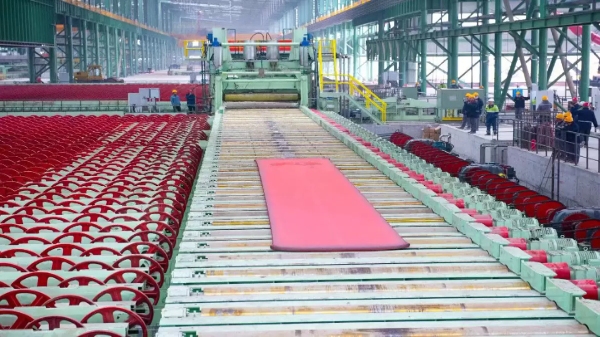
What Is a Plate Cooling Bed in a Steel Production Line?
A plate cooling bed is a core auxiliary system installed after the hot rolling mill in a steel plate production line. Its primary function is to control and stabilize the cooling process of hot rolled steel plates before they enter downstream operations such as leveling, cutting, inspection, stacking, or transportation.
When steel plates exit the rolling mill, they often exceed temperatures of several hundred degrees Celsius. Direct handling or uncontrolled cooling at this stage can cause:
A plate cooling bed ensures uniform heat dissipation, controlled movement, and safe handling, which significantly improves overall product quality.
Why Plate Cooling Beds Are Critical in Modern Production Lines
1. Ensuring Dimensional Accuracy and Flatness
One of the most important roles of a plate cooling bed is maintaining flatness and dimensional stability. Uneven cooling causes localized contraction, which leads to deformation.
By allowing plates to cool gradually and evenly across their entire surface, cooling beds help manufacturers meet strict tolerances required by:
2. Improving Mechanical Properties of Steel Plates
Controlled cooling directly influences the microstructure of steel. A well-designed cooling bed supports consistent metallurgical properties such as:
Yield strength
Tensile strength
Toughness
Ductility
This is especially important for high-strength and special alloy steel plates used in demanding industrial environments.
3. Enhancing Production Line Efficiency
Plate cooling beds function as a buffer zone within the production line, allowing continuous rolling operations without interruption. Benefits include:
Reduced bottlenecks between rolling and finishing sections
Improved line automation compatibility
Lower labor intensity and safer working conditions
Reduced equipment wear and maintenance costs
In high-capacity steel plants, optimized cooling beds can significantly increase overall throughput.
Types and Design Features of Plate Cooling Beds
Modern plate cooling beds are engineered to adapt to different production requirements. Common design features include:
Roller-Type Plate Cooling Beds
Continuous roller support for smooth plate transfer
Suitable for heavy and wide steel plates
High load-bearing capacity
Air-Cooling or Forced Cooling Systems
Natural air cooling for energy efficiency
Fans or blowers for accelerated cooling
Optional water spray systems for specific metallurgical needs
Modular and Customized Designs
Adaptable length and width
Integration with automation and control systems
Easy maintenance and long service life
Equipment suppliers with strong engineering capabilities can customize cooling beds to match specific rolling mill layouts and production targets.
The Role of Plate Cooling Beds in Downstream Processing
A properly cooled steel plate ensures smoother downstream operations, including:
Plate leveling and straightening
Precision cutting and shearing
Surface inspection and quality control
Automated stacking and packaging
This reduces rework, minimizes scrap rates, and improves delivery consistency for end customers.
Dadi : Reliable Partner for Plate Cooling Solutions
Founded in 2001, Jiangyin Dadi Equipment Co., Ltd. is a professional manufacturer specializing in metallurgical auxiliary equipment and bulk material conveying systems. With extensive experience in steel plant projects, Dadi provides plate cooling beds that integrate seamlessly into modern plate production lines.
Company strengths include:
Strong engineering and technical team
Focus on durability, stability, and safety
Custom solutions tailored to customer requirements
Export experience to over 30 countries and regions
Dadi’s plate cooling beds are designed to support high-temperature, heavy-load, and continuous operation environments, making them suitable for both new production lines and modernization projects.
Frequently Asked Questions
Q1: What happens if steel plates are cooled too quickly?
Rapid or uneven cooling can cause internal stress, cracking, and plate deformation, leading to quality issues and higher rejection rates.
Q2: Can plate cooling beds be customized for different plate sizes?
Yes. Modern plate cooling beds can be customized in length, width, load capacity, and cooling method based on production requirements.
Q3: Are plate cooling beds suitable for automated production lines?
Absolutely. Most modern cooling beds are designed to integrate with automated conveying, control, and stacking systems.
Q4: How do plate cooling beds improve plant safety?
They reduce manual handling of hot plates, minimize accident risks, and create a safer working environment for operators.
Conclusion
Plate cooling beds are an indispensable part of modern steel plate production lines. By ensuring controlled cooling, stable handling, and smooth integration with downstream processes, they directly contribute to improved product quality, operational efficiency, and long-term competitiveness.
For manufacturers seeking reliable and high-performance cooling solutions, partnering with experienced equipment suppliers such as Jiangyin Dadi Equipment Co., Ltd. provides both technical assurance and long-term value.
Bridge-Type Scraper Reclaimer Solutions for Efficient Bulk Material Handling